Tracing Batch Authorization Patterns Across Multi-Gateway Setups for Crowdfunding Platforms Managing Staged Fund Releases
Written by Paul Schröder · Oct 19, 2026
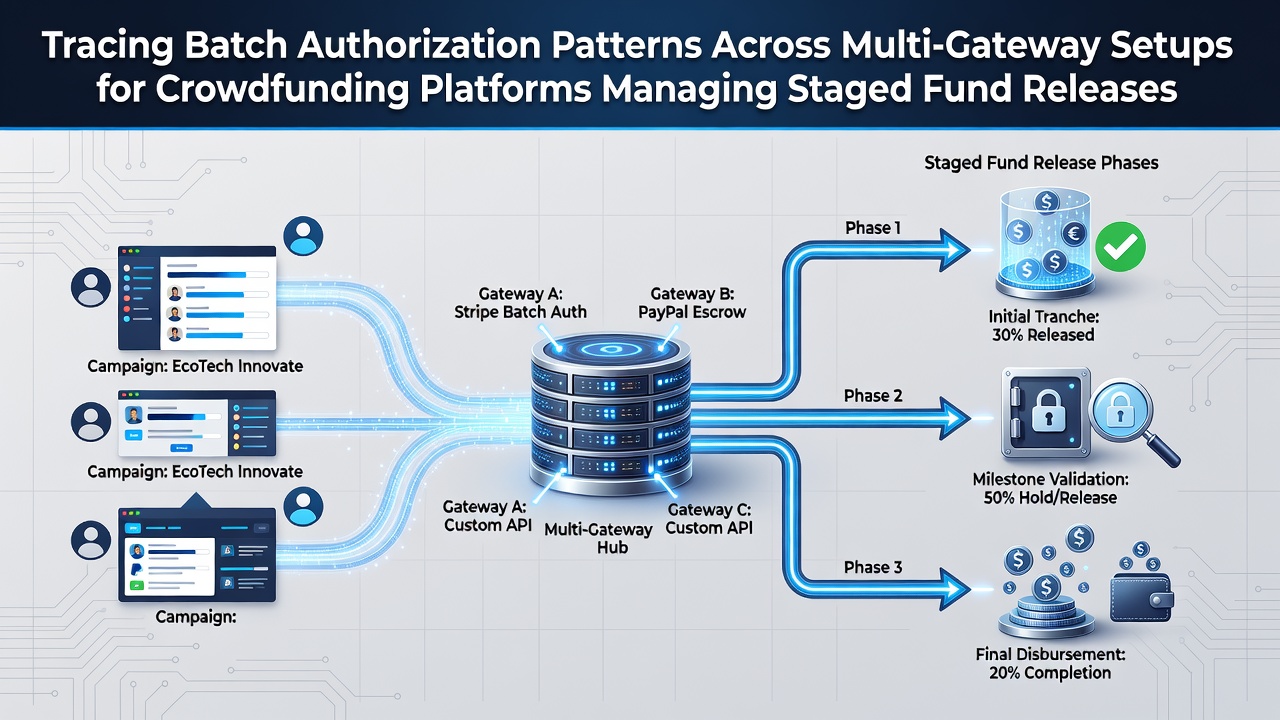
Tracing Batch Authorization Patterns Across Multi-Gateway Setups for Crowdfunding Platforms Managing Staged Fund Releases
Payment systems in crowdfunding environments rely on coordinated batch authorization patterns when platforms connect several gateways to handle staged fund releases, and observers note that these setups allow backers to commit funds while releases occur only after project milestones receive verification. Researchers have documented how platforms distribute authorization requests across gateways from different processors, which reduces single-point failures and maintains compliance with varying regional rules as of October 2026.
Core Mechanics of Multi-Gateway Configurations
Multi-gateway architectures connect primary processors with secondary and tertiary providers so that authorization batches route based on transaction volume, currency type, and risk profiles, while data from industry reports shows that platforms often assign high-value pledges to gateways equipped with stronger fraud filters and lower-value ones to cost-efficient routes. Experts observe that synchronization occurs through middleware layers that log each batch identifier, timestamp, and response code, creating traceable chains that auditors later review during settlement cycles.
Those who manage these systems emphasize the role of unique batch reference numbers generated at the platform level, and these numbers travel with each authorization request so that reconciliation teams can match initial holds against later captures without duplicating efforts across separate processor dashboards.
Staged Fund Release Workflows
Crowdfunding platforms divide project funding into stages tied to deliverables such as prototype completion or regulatory approvals, and batch authorizations support this model by placing temporary holds that convert to captures only when predefined conditions trigger. Data from payment network analyses indicates that platforms schedule batch submissions in timed windows, often aligning with business hours in multiple time zones to optimize approval rates and minimize declines caused by daily processing limits.
One documented approach involves pre-authorizing the full pledged amount at campaign close, then releasing portions sequentially as milestones pass verification, whereas another method authorizes incremental amounts at each stage to reduce exposure if a project encounters delays. Both patterns require precise tracking of authorization expiry dates because most card networks limit hold durations to seven or thirty days depending on the card type.
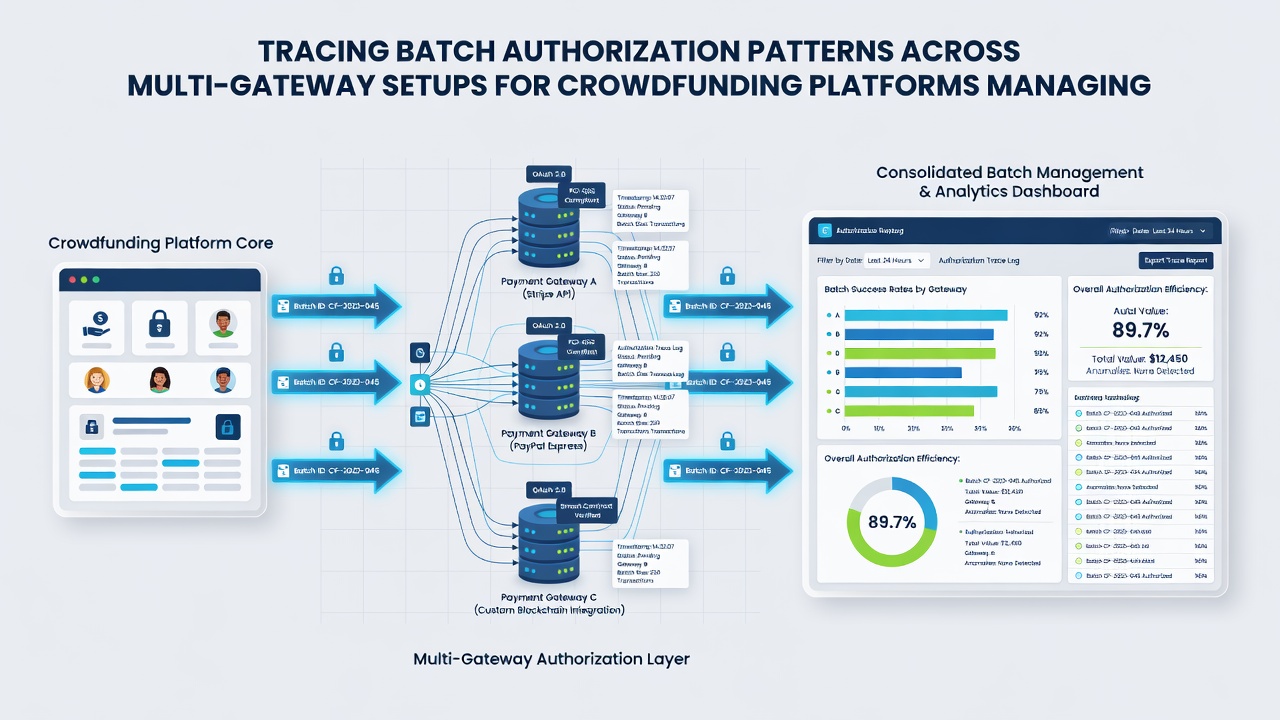
Tracing and Monitoring Techniques
Tracing begins with centralized logging platforms that ingest response files from every connected gateway, and analysts correlate these files against internal milestone databases using matching algorithms that flag discrepancies in authorization amounts or status codes. Research from academic studies on distributed payment systems reveals that platforms employing real-time dashboards achieve faster detection of routing anomalies compared with those relying solely on end-of-day reconciliation reports.
Teams often implement automated alerts when batch success rates drop below thresholds established for each gateway, while additional layers of monitoring track retry patterns after soft declines so that platforms can adjust routing logic before repeated failures affect project timelines. According to Federal Reserve publications, consistent monitoring of authorization patterns helps identify seasonal spikes in transaction volumes that crowdfunding platforms experience during major campaign launches.
Regulatory and Operational Considerations
Platforms operating across borders must align batch authorization practices with rules from multiple jurisdictions, and evidence from regulatory filings shows that European operators follow PSD2 requirements for strong customer authentication while North American counterparts adhere to PCI DSS standards for data handling. Observers note that October 2026 brought updated guidance from the Reserve Bank of Australia on settlement finality that affects how platforms time their capture requests across gateways serving Australian backers.
Operational teams maintain detailed audit trails that record every authorization attempt, gateway assignment, and status change because regulators increasingly request these records during compliance reviews. Those who study platform operations report that integrating these trails with project management tools allows finance staff to verify that fund releases correspond exactly to verified milestones without manual cross-referencing.
Conclusion
Batch authorization patterns in multi-gateway crowdfunding setups provide the traceability required for staged fund releases, and platforms continue to refine routing logic and monitoring practices as transaction volumes grow. Data collected through October 2026 demonstrates that consistent logging, milestone-linked captures, and cross-gateway reconciliation remain central to maintaining both operational efficiency and regulatory compliance in this environment.